A spherical robot rolls effortlessly across uneven terrain, maneuvering around craters and gliding over dusty surfaces. This is the vision behind RoboBall, developed by researchers at Texas A&M University. Led by Robert Ambrose and graduate students Rishi Jangale and Derek Pravecek, the project seeks to transform how we explore alien landscapes.
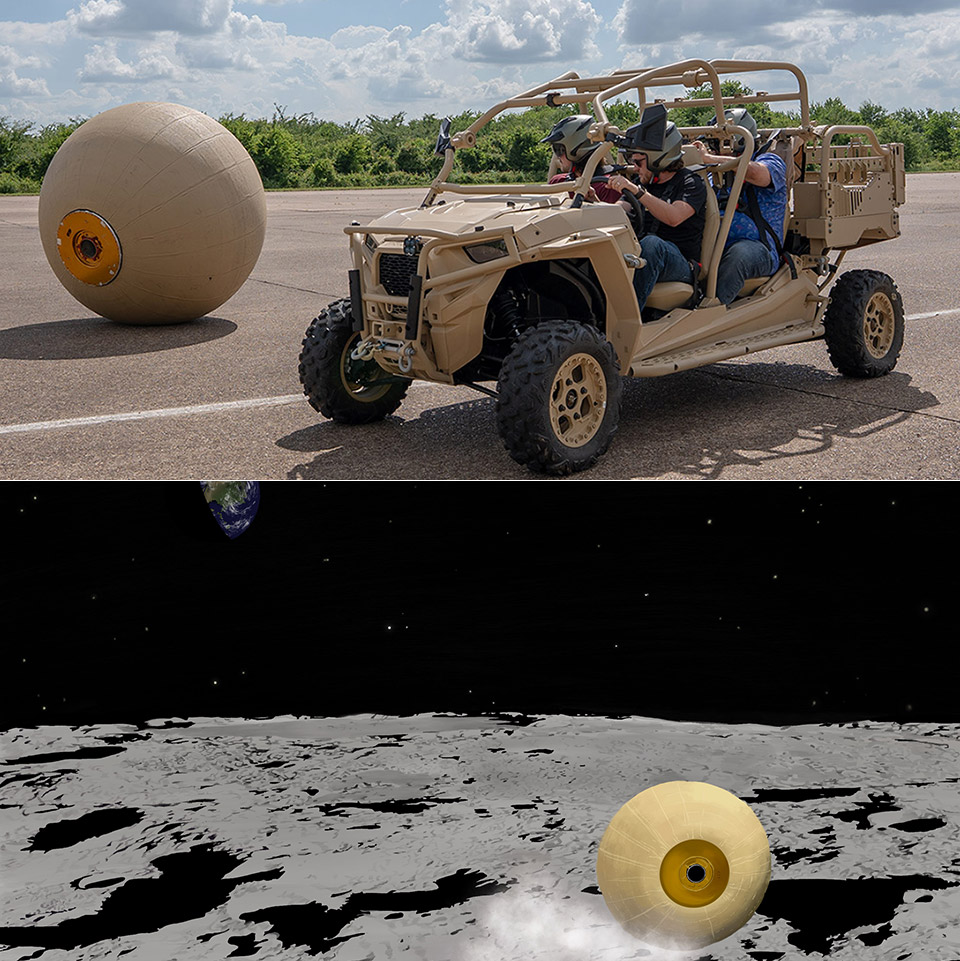
RoboBall’s design focuses on simplicity and durability, as demonstrated by the latest prototypes, RoboBall II and III. RoboBall II, a 2-foot-diameter test model, houses a pendulum and motor system inside a soft exterior shell. By swinging the pendulum, it shifts its center of gravity, allowing movement in any direction with remarkable agility. During testing, it handled grass, gravel, sand, and even water, reaching speeds of up to 20 mph. Its ability to navigate a variety of surfaces without getting stuck prepares it for the constantly changing terrain of the Moon.
RoboBall III, a 6-foot-diameter model, is built to tackle real-world challenges. Equipped with sensors, cameras, and sample instruments, it can inflate or deflate its outer shell to adjust traction for different surfaces. Whether climbing rocky slopes or rolling over soft regolith, RoboBall III adapts in real time, enhancing grip and reducing wear. Its spherical shape means orientation doesn’t matter—a tumble down a crater’s edge won’t affect its operation. This resilience could redefine missions where traditional rovers struggle.
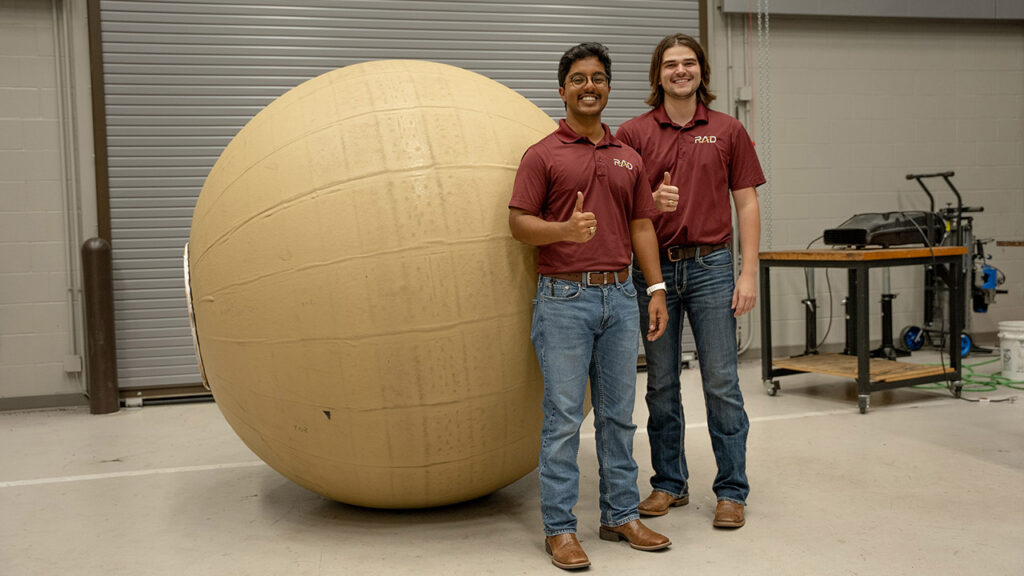
The RoboBall concept originated at NASA more than 20 years ago but remained dormant until Ambrose brought it to Texas A&M’s Robotics and Automation Design Lab. The team updated and refined the idea with support from the Chancellor’s Research Initiative and the Governor’s University Research Initiative. Their work goes beyond space exploration. Field tests on Galveston beaches will soon examine how RoboBall transitions from water to land, demonstrating its versatility. On Earth, the team envisions uses such as search and rescue operations after disasters, where swarms of these spheres could map flood zones or locate survivors while keeping humans out of harm’s way.
The pendulum system’s elegance allows for significant adaptability. On the Moon, where every gram counts, a lightweight, rugged robot capable of rolling while carrying scientific instruments is a major advantage. With modular payloads such as cameras or soil samplers, RoboBall can be tailored to specific mission needs. Its proven ability to endure Earth’s harshest conditions also makes it ideal for applications closer to home, including disaster response and environmental monitoring.