
Meta is preparing for its Connect conference, and a major leak has already revealed its headline announcement. A video, briefly published on Meta’s official YouTube channel before being pulled, showcased an upcoming generation of Ray-Ban smart glasses that include a built-in display and a wristband designed for gesture-based control.
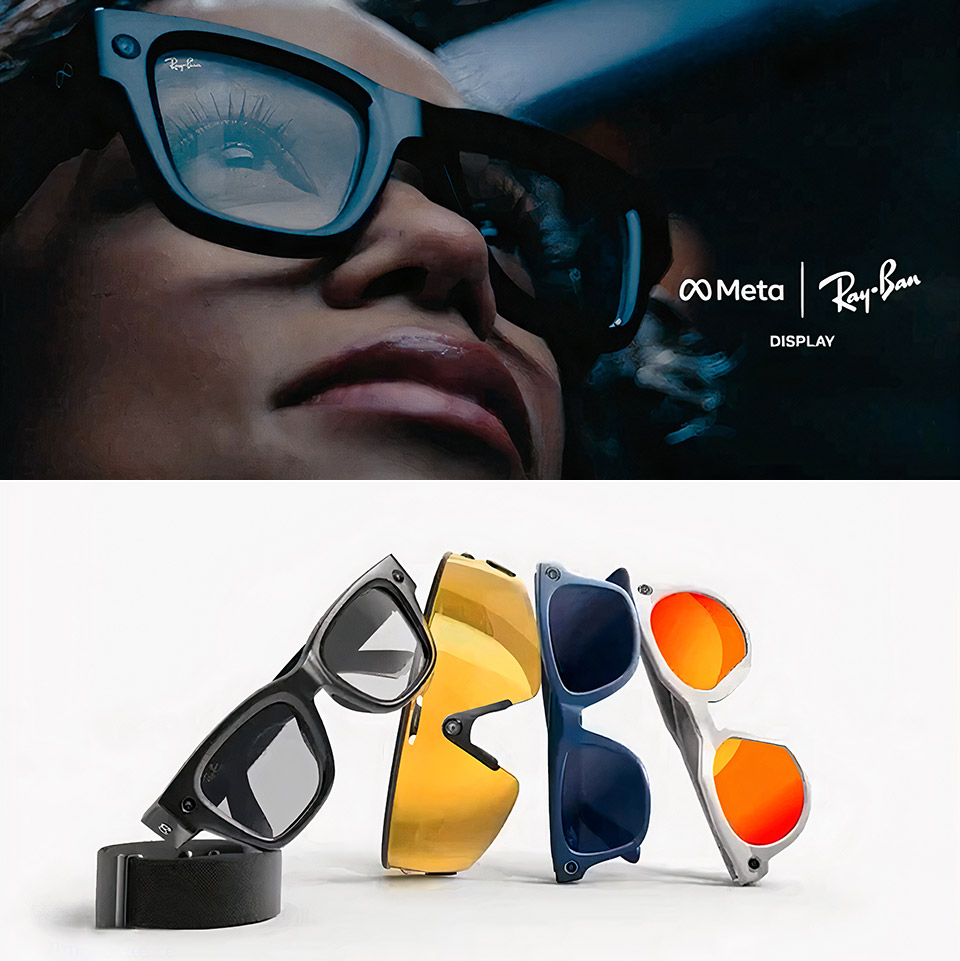
Ray-Ban and Meta have been collaborating since 2021, starting with the launch of Ray-Ban Stories. Those early models allowed users to capture photos and short videos through voice commands, blending fashion with technology, but they lacked the advanced tools that would make them indispensable for everyday life. Now, in 2025, Meta is set to deliver a far more ambitious product. According to UploadVR, which first reported on the leak, the new model—dubbed the Meta Ray-Ban Display—features a small screen embedded in the right lens. This capability, long rumored under the codename Hypernova, marks a significant evolution in wearable tech.
The leaked footage highlights what the display can do: show turn-by-turn navigation, instantly translate signs while traveling abroad, or bring up a chat window where users can type or respond in real time. With direct integration of Meta AI, wearers can ask questions, search, or receive context-aware updates projected into their line of sight. It’s the type of heads-up experience once reserved for science fiction, only delivered now in the iconic Ray-Ban Wayfarer silhouette—black frames, clean lines, and a classic aesthetic that ensures style remains central to the appeal.
A standout feature is the companion wristband, believed to be the Ceres controller, referenced in previous leaks. Using surface electromyography (sEMG), the wristband interprets subtle electrical signals from hand and finger movements, allowing seamless control of the display. The video shows someone composing a reply in a messaging app simply by swiping their fingers—no buttons, no clunky touchpads, and no dependence on voice input. This technology traces its origins to Meta’s Orion AR glasses prototype, but its refinement here could make everyday interactions far more natural.

Pricing remains a crucial question. CNBC reports the Hypernova glasses may launch around $800, while Android Authority estimates a range between $1,000 and $1,400. That’s a steep jump compared to the current Ray-Ban Meta glasses, but the enhanced functionality—display integration, gesture-based controls, and real-time AI support—explains the premium.
The leaks didn’t stop with Ray-Ban. The video also revealed the Oakley Sphaera, a separate line of smart glasses designed for performance and action sports. Featuring a wraparound frame ideal for cycling, snowboarding, and other high-energy pursuits, the Sphaera skips the display in favor of a centered high-resolution camera positioned above the nose bridge. According to reporting by Bloomberg’s Mark Gurman, these glasses target athletes and active users, boasting longer battery life and superior recording capabilities compared to earlier Oakley-Meta collaborations.
With Meta expanding both fashion-forward and sport-focused smart eyewear through Ray-Ban and Oakley, the company is positioning itself to capture not just tech enthusiasts but also lifestyle and athletic communities. The strategy blends Silicon Valley innovation with brands that have decades of cultural relevance, signaling that smart glasses are no longer a niche experiment but a category pushing toward mainstream adoption.