How matcha, Clairo, and feminist literature became markers of masculinity in the meme age
The “performative male” is a Gen Z archetype satirized in memes and social media skits: a man drinking Matcha Oat lattes, listening to Clairo, and reading feminist texts like Bell Hooks. Think Jacob Elordi with a Bottega Veneta bag, Paul Mescal in a Clairo hoodie, or Pedro Pascal on the beach with a Tokarczuk novel. While humorous on the surface, this trend reflects deeper cultural and historical dynamics.
The archetype has roots in sociological studies of leisure and taste. Thorstein Veblen, in Theory of the Leisure Class (1899), described men who curated lifestyles to signal cultural status rather than brute strength. Pierre Bourdieu’s Distinction (1979) later emphasized how everyday choices confer aesthetic and social capital. The meticulous attention to seemingly trivial details—earphones, tote bags, niche literary references—echoes these historical ideas in a contemporary, meme-fueled context.

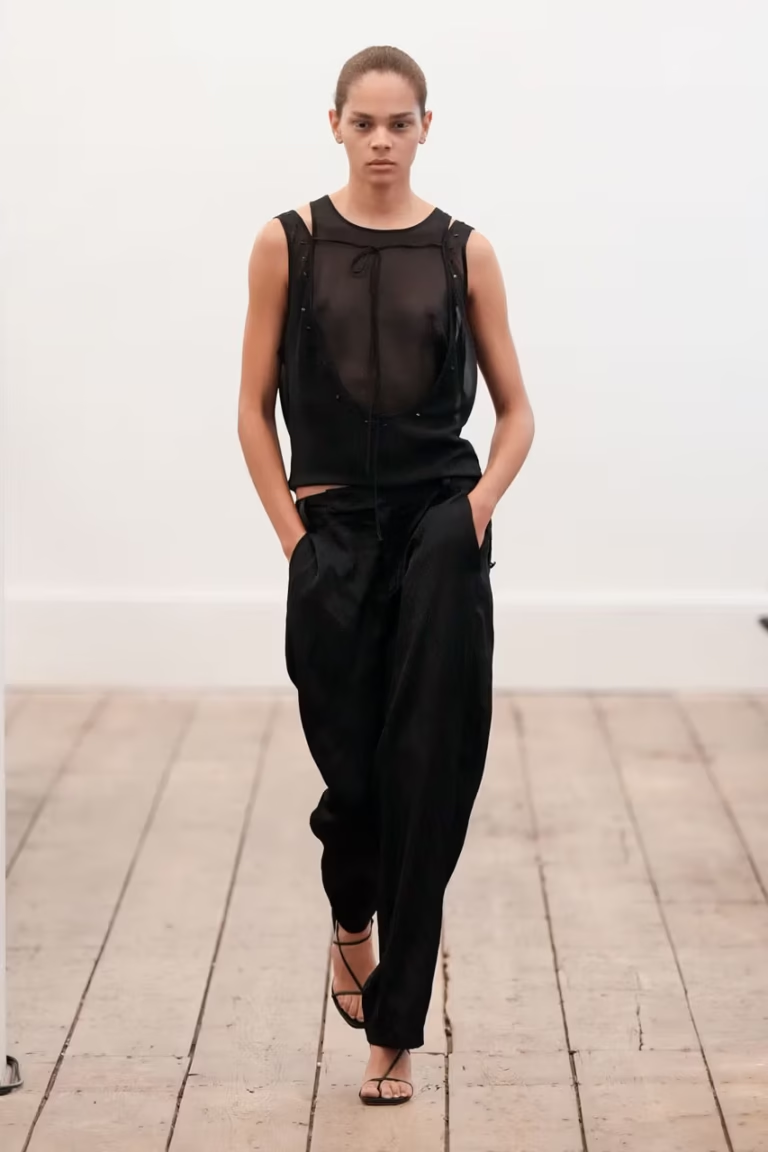
Fashion and marketing have embraced the performative male, turning literature into handbags, wired earphones into necklaces, and even matching sneakers with ironic slogans. Platforms like Instagram, TikTok, and Snapchat have accelerated this “always-on” performance, shaping how young men present themselves in public and online.
Anthropologist Carrera Kurnik links the rise of the performative male to modern pressures around authenticity. Drawing on Erving Goffman’s The Presentation of Self in Everyday Life (1956), she explains that social life is inherently performative, but social media intensifies scrutiny, creating suspicion toward any overtly curated persona. In a world rife with misinformation and AI-generated content, audiences question whether what is broadcasted reflects genuine beliefs or merely performative acts.
Men’s awareness of female audiences shapes this performance. Meme trends like Timothée Chalamet and Pedro Pascal lookalike events reveal a cultural shift: male attention is directed toward figures representing emotional depth rather than traditional masculinity. Yet, male audiences often frame “performers” as effeminate or weak, using terms like “simp” or “whipped” to police social hierarchies.
The performative male archetype also intersects with gender expectations. Many memes reflect behaviors assumed to appeal to women—listening to female singer-songwriters, reading feminist texts, carrying tote bags—highlighting both genuine attempts to understand female subjectivity and cultural skepticism about men’s motives. Heteropessimism, the suspicion that male feminism is performative, underpins this critique.
However, if ulterior motives are ruled out, cultivating awareness of female subjectivity may be a positive step toward breaking patriarchal molds. In this light, the performative male could be seen as experimenting with new forms of masculinity, exploring empathy and cultural literacy beyond traditional gender norms. Bell Hooks’ words resonate here: “Come closer and you will see: feminism is for everybody.”