
Boeing has revealed early details of the F/A-XX, its entry for the US Navy’s future fighter program, at the Tailhook Symposium. This jet represents the backbone of naval aviation for the 2030s.
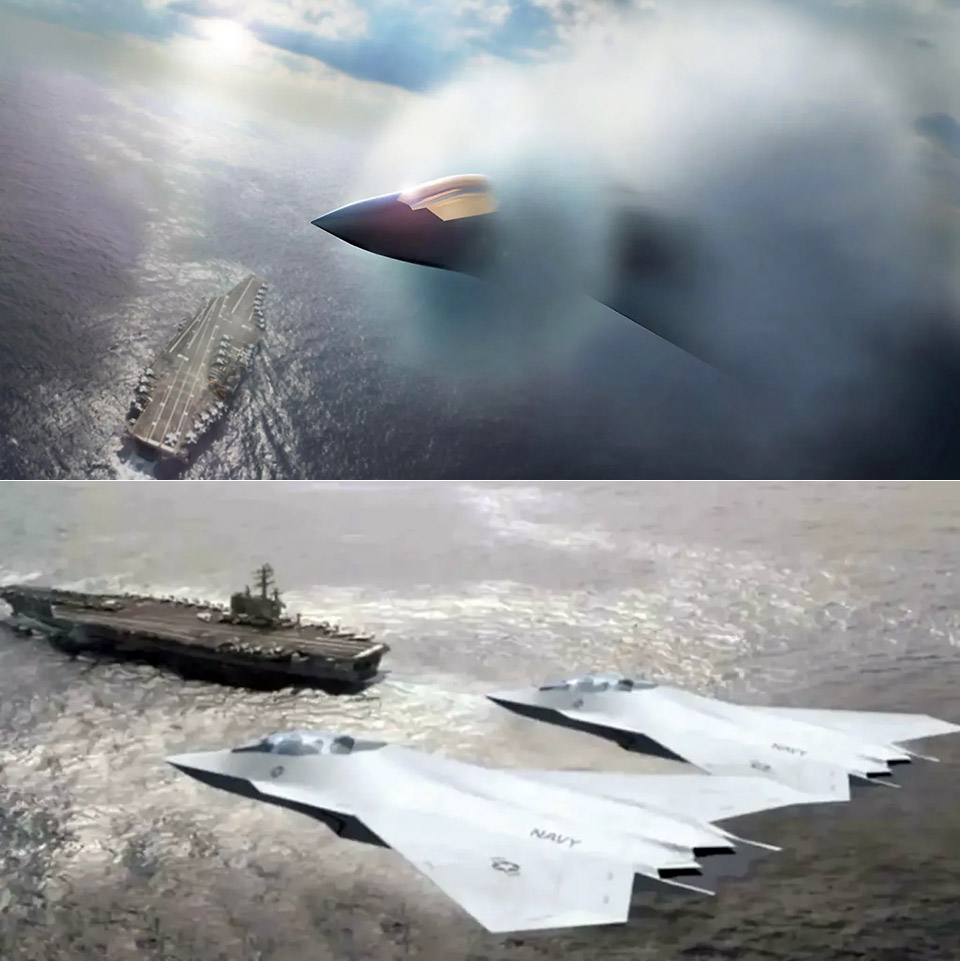
Carrier-based fighters face unique demands, needing to launch from moving decks, withstand harsh maritime conditions, and land on short runways. The F/A-XX is designed to meet these challenges while replacing the aging F/A-18 Super Hornet, which will reach 9,000 flight hours by the early 2030s. It promises 25% greater range than current fighters, a critical factor for operations across the vast Pacific amid the threat of long-range missiles. Combined with mid-air refueling, this range could give carrier air wings an operational area of roughly 11 million square miles, larger than North America.
Stealth plays a major role in the F/A-XX, though Boeing’s approach raises some questions. The design features a pointed nose and bubble canopy reminiscent of the Air Force’s F-47, Boeing’s sixth-generation fighter. Canards, or small forward-mounted wings, stand out on the design—they enhance low-speed maneuverability during carrier landings but do increase radar visibility, representing a trade-off between agility and stealth.
The F/A-XX is built for contested environments and will coordinate with unmanned drones, acting as a command hub to extend its operational reach and firepower. AI systems will be crucial for processing sensor data and managing these drones globally. Unlike the Air Force’s F-47, which uses a specialized long-range engine, the F/A-XX will utilize a derivative powerplant. This cost-effective choice still provides enough thrust for hypersonic missiles and potential directed energy weapons such as lasers, which could transform future aerial combat.
Boeing’s main competition comes from Northrop Grumman, after Lockheed Martin’s design failed to meet Navy standards in March 2025. Northrop’s concept emphasizes stealth with a smooth, canard-free design, in contrast to Boeing’s blend of agility and radar evasion. The Navy will evaluate these designs based on cost, capability, and carrier compatibility. Congressional funding supports the program with $1.4 billion from the Senate and $972 million from the House.
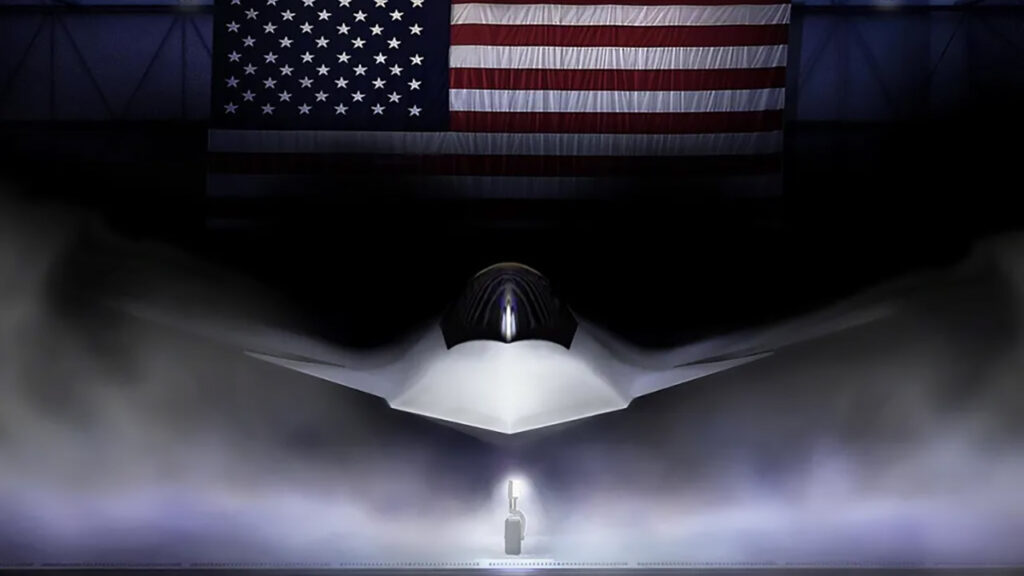
Boeing’s confidence is reinforced by a $2 billion investment in facilities like the Advanced Combat Aircraft Assembly Factory in St. Louis, Missouri. This facility currently produces the F-47 and could accommodate F/A-XX production if Boeing secures the contract. Company leadership, including CEO Steve Parker, believes the US defense sector can support two sixth-generation programs simultaneously. Shared features between the F/A-XX and F-47, such as the cockpit and tailless design, allow Boeing to leverage common parts for faster production and cost savings.